
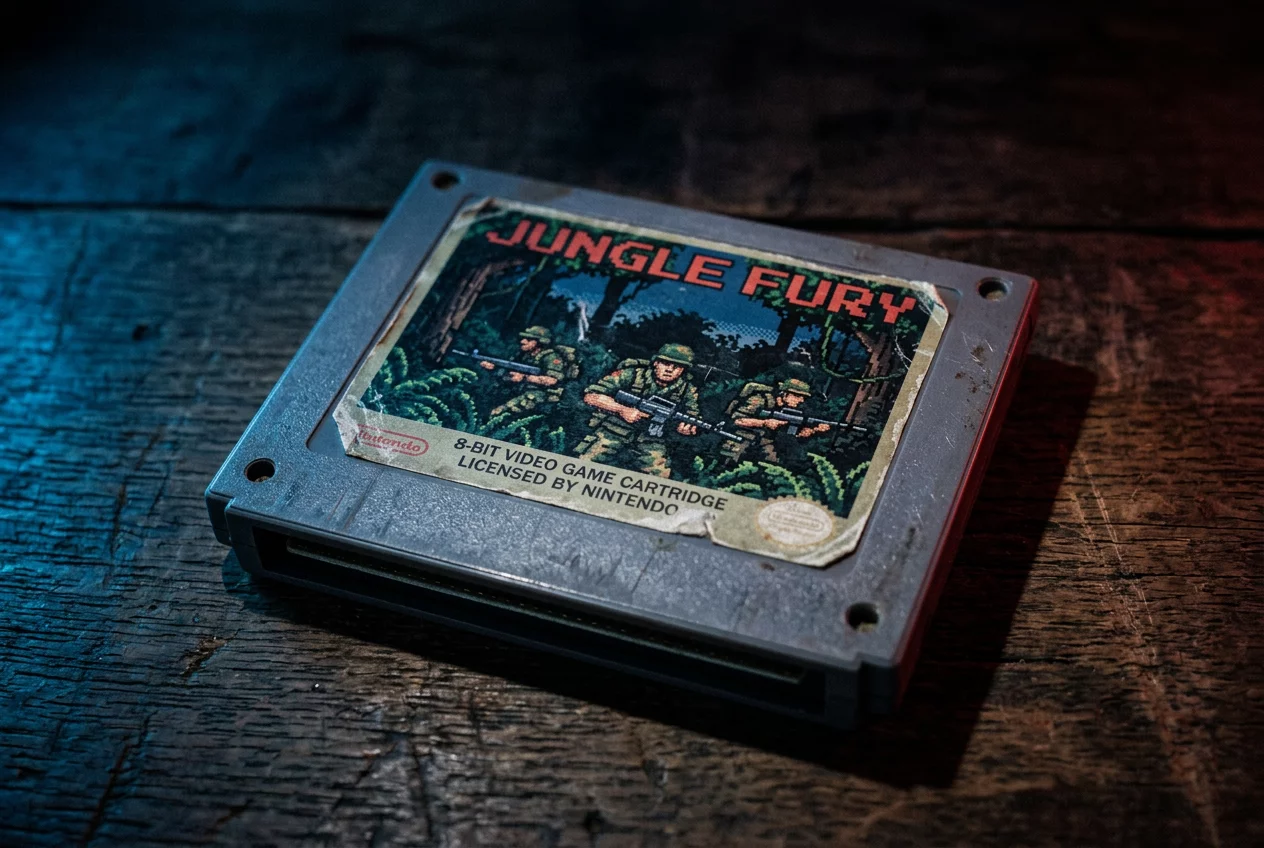
Every kid growing up with a Dendy in the early nineties knew the legend. While the famous Konami Code granted a generous thirty lives, many whispered about a deeper secret. The 99 lives code was the Holy Grail of childhood gaming rumors. It promised near-immortality, allowing even the most reckless soldier to survive the treacherous journey through the alien-infested jungle without a single Game Over.
The Shadow of the Konami Code
The myth likely sprouted from the legitimate success of the Konami Code. Up, Up, Down, Down, Left, Right, Left, Right, B, A, Start solidified itself as a gamer’s first prayer. But human nature always craves more. In a time before the widespread internet, rumors flourished in school hallways. Players claimed that varying the rhythm of the inputs or holding specific buttons during the title screen would triple the life count.
The Most Popular Variations
- The Counter-Phase: Entering the Konami code backward while holding Select.
- The Turbo Glitch: Using a Turbo controller to input A and B simultaneously over a hundred times.
- The Level Select Myth: Reaching a specific area in Level 3 and performing a precise sequence of jumps.
Despite thousands of calloused thumbs and broken joysticks, no verifiable evidence ever surfaced of a native 99-life code in the original Contra release. Modern rom-hacking and memory analysis have confirmed that the game’s architecture simply never intended to store such a number for a single-input cheat. The dream of 99 lives remained just that—a digital ghost in the console shell.
The Konami Code and Its Discontents
Contra's relationship with the Konami Code is one of the most famous partnerships in gaming history, yet the myth of a 99-lives code persists as a fascinating alternative history. The actual Konami Code — Up, Up, Down, Down, Left, Right, Left, Right, B, A — granted 30 lives in the Japanese version and 30 lives in most other regional releases. But playground rumors across multiple continents insisted that a different code existed, one that would grant the mythical 99 lives and transform the player into an unstoppable force against the Red Falcon alien invasion. This alternate code took many forms, each reflecting the specific cultural context where it emerged.
In North America, the 99-lives myth often involved modifying the standard Konami Code by adding additional button presses at the end — sometimes Start and Select, sometimes a repeated B-A sequence, sometimes a complex pattern involving the controller's shoulder buttons. European versions of the myth frequently claimed that the code had to be entered while holding the controller upside down, or that the directional inputs had to be performed on the D-pad while simultaneously pressing corresponding directions on the joystick. The Dendy version of the myth, circulating through post-Soviet playgrounds, proposed that the 99-lives code only worked on cartridges with specific manufacturing codes printed on the label, creating a hierarchy of "legitimate" versus "fake" Contra cartridges that influenced trading and social status.
Technical analysis of the Contra ROM reveals no code that grants 99 lives under any input condition. The game's title screen routine checks for the standard Konami Code sequence and branches to a routine that sets the life counter to 30 (or to a regional equivalent). There are no alternate code paths, no hidden input buffers, and no conditional logic that might produce different results based on controller orientation or cartridge identification. The 99-lives myth is pure fiction, but it is fiction that speaks to genuine player desires — the desire for infinite resources in a game that feels deliberately unfair, and the desire to possess secret knowledge that other players lack.
Codes, Community, and the Myth of Mastery
The Contra 99-lives myth illustrates how cheat codes functioned as social currency in 90s gaming culture. Children who knew codes — real or imagined — gained status and influence in their peer groups, and the proliferation of false codes served as a form of social protection for those who possessed genuine information. By inventing elaborate 99-lives procedures that were impossible to verify, players could maintain the mystique of code knowledge while actually possessing nothing more than the standard 30-lives trick. This dynamic created an information economy where the value of codes was determined not by their technical validity but by their perceived exclusivity.
The Dendy version of Contra contributed to the myth's persistence through its particular material context. Famiclone cartridges were often manufactured with varying quality levels, and some Dendy players genuinely experienced games that behaved differently from their official Nintendo counterparts. These hardware variations — sometimes caused by faulty ROM chips, sometimes by modified game versions — created legitimate uncertainty about whether a particular code might work on a particular cartridge. Players who had encountered glitches or variations naturally assumed that code differences might also exist, and they were not entirely wrong to think so, even if the specific 99-lives code was fictional.
Modern emulation and ROM hacking have made Contra's code mechanics transparently accessible, and the 99-lives myth has evolved from a playground rumor into a nostalgic touchstone. Speedrunners who play the game without any codes have demonstrated that Contra is completable with the default three lives, transforming the game from an impossible challenge into a test of pure skill. The myth of 99 lives persists not because players still believe it, but because it represents a moment in gaming history when the boundary between game mechanics and player imagination was genuinely blurry — when a string of button presses could feel like a magical incantation that might unlock infinite possibilities.
Case Files: Comments
Soldier88
2026-04-10It was 30 lives, not 99! I still remember the sequence by heart, but 99 was just a dream we had.
Add to the Archive