
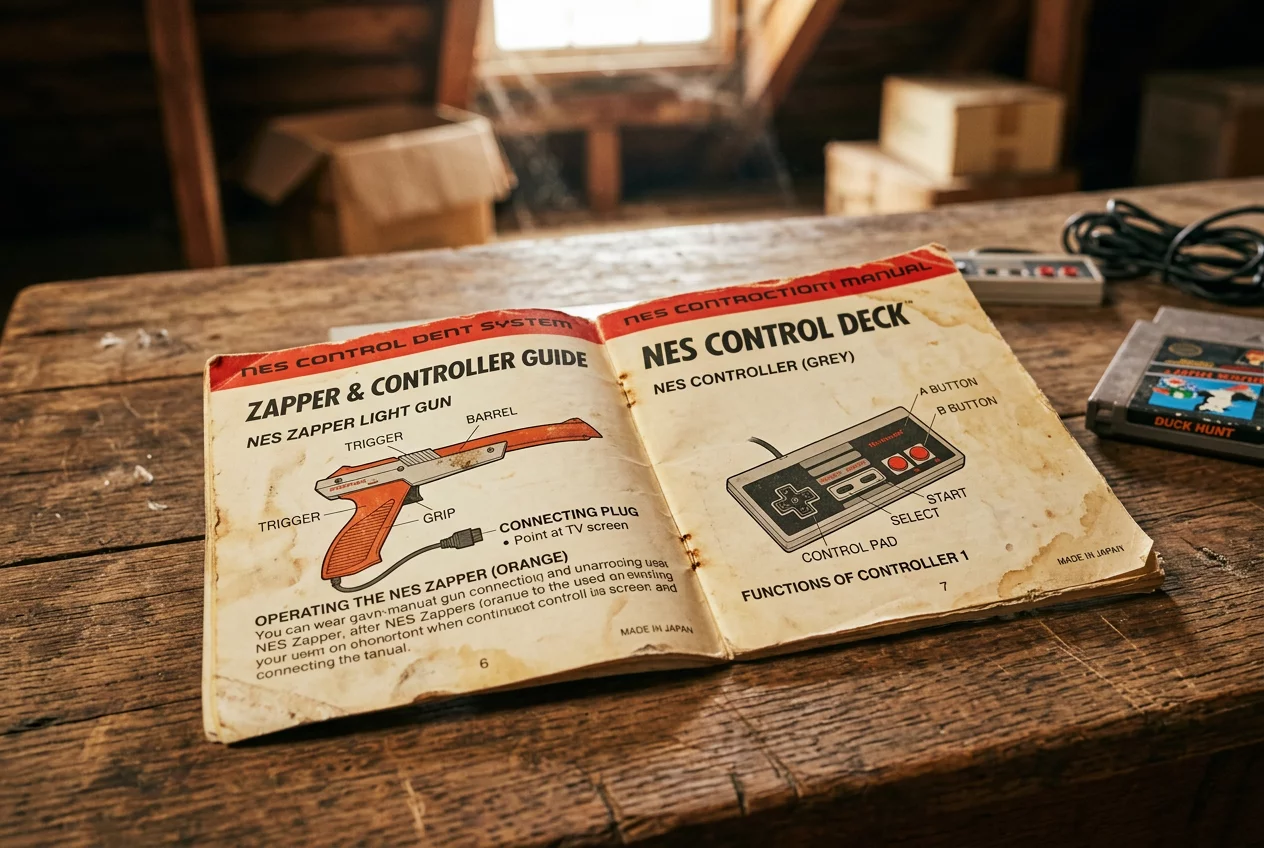
For years, kids across the globe gathered around their bulky CRT televisions, clutching the iconic orange Zapper and aiming at pixelated ducks. But in those dimly lit living rooms, a rumor spread like wildfire: many believed it was possible for another person to control the ducks. While most dismissed this as just another schoolyard legend designed to explain away a friend's terrible aim, the truth is far more fascinating.
The Origin of the Myth
Unlike the fake codes for naked characters in fighting games or the impossible "Sheng Long" in Street Fighter, the Duck Hunt myth felt grounded. In it, siblings and friends noticed that when a second controller was plugged into the second port, the ducks seemed to exhibit more erratic, almost intelligent behavior. It wasn't until years later that magazines and online communities confirmed that this wasn't just a ghost in the machine—it was a feature.
The Dendy, that beloved grey and red clone of the Famicom, behaved exactly like its official counterpart in this regard. One player would hold the light gun, focusing on the screen, while the other could pick up the standard D-pad controller. This dynamic changed the game from a test of reflexes against a computer to a psychological battle between two humans.
Executing the Command
There are no complex button combinations required to unlock this mode. It doesn't require a crown or an online connection to verify some hidden DLC. Logic suggests it was intended as a training mode or perhaps an unfinished multiplayer component that the developers decided to leave in. Simply choose the Single Duck mode in Game A. While the hunter prepares their Zapper, a second person can use the directional pad on Controller 2 to guide the duck across the screen.
- Up/Down: Adjusts the altitude of the target.
- Left/Right: Changes the horizontal speed and direction.
- Diagonal: Combines vectors for maximum evasion.
The laughing dog, frequently a source of frustration for many players, becomes even more annoying when you know a real person is directly responsible for your failure. This hidden mechanic transformed a simple arcade port into one of the earliest examples of asymmetrical multiplayer gaming, long before terms like that were even coined by the industry.
The Second Gunman Theory
The Duck Hunt two-player myth emerged from the peculiar interface design of the Nintendo Entertainment System. The console featured two controller ports, yet Duck Hunt appeared to use only the first port for the Zapper light gun. This seemingly wasted hardware capability naturally invited speculation about hidden functionality. Children who understood that video games often contained secrets began to wonder if the second port served some purpose that the manual had neglected to mention. The myth proposed that a second player could secretly control the ducks by connecting a standard controller to port two and using an undisclosed button combination to direct the birds' flight patterns.
The specific activation methods proposed for this hidden mode varied across different communities. Some players claimed that holding A and B simultaneously while pressing Select would transform the second controller into a duck interface. Others insisted that the second player needed to hold the controller upside down and press the directional pad in a specific sequence that matched the ducks' flight patterns. Brazilian and Russian versions of the myth added elaborate details about cooperative modes where one player controlled horizontal movement and the other controlled vertical, creating a shared experience that the game had supposedly hidden from Western audiences.
Technical analysis of the Duck Hunt ROM reveals that the game does not poll the second controller port during gameplay. The NES architecture allowed developers to read input from either port, but Duck Hunt's code specifically initializes only the first port for Zapper reading and ignores the second port entirely. This design choice was not arbitrary — the Zapper requires specialized hardware timing that would have interfered with standard controller polling, and the developers likely made the pragmatic decision to support only one input method to ensure reliable light gun detection. The myth of two-player duck control, while charming, is technically impossible without rewriting the game's core input handling routines.
Light Gun Lore and Playground Economics
The Duck Hunt two-player myth serves as an excellent case study in how children rationalize hardware limitations through narrative creativity. The NES had two controller ports, a fact that was prominently advertised in marketing materials and visible every time a child crawled behind the television to plug in a game. For a generation that had grown up with two-player arcade cabinets, the presence of a second port implied multiplayer capability even when software didn't support it. The myth of hidden two-player modes across the NES library — from Duck Hunt to Excitebike — reflects a consistent pattern of expectation mismatch between hardware affordances and software implementation.
The persistence of the Duck Hunt myth can also be attributed to the game's cultural prominence. Bundled with the NES and the Zapper in the famous Action Set, Duck Hunt was one of the most widely owned games of the 8-bit era. Its simple premise and accessible controls made it popular with casual gamers and younger children who might not have understood technical explanations for why the second port was unused. These players were more likely to believe playground rumors because they lacked the technical vocabulary to evaluate their plausibility, and they had no access to the internet resources that would eventually debunk them.
Modern speedrunners and TAS (Tool-Assisted Speedrun) creators have thoroughly analyzed Duck Hunt's code, confirming the absence of any two-player functionality but also documenting the precise memory addresses where controller input is read. This technical clarity has not prevented the myth from persisting in retro gaming communities, where it is often repeated as a nostalgic joke or a teachable example of playground misinformation. The Duck Hunt two-player myth ultimately demonstrates that the most enduring game legends are not necessarily those with the most technical plausibility, but those that tap into deeply held assumptions about how technology should work — assumptions shaped by children's intuitions about fairness, sharing, and the hidden potential of their toys.
Case Files: Comments
DogLaugh
2026-04-20Wait, player 2 can control the ducks?! I thought my brother was just lucky with the controller in his lap!
Add to the Archive