
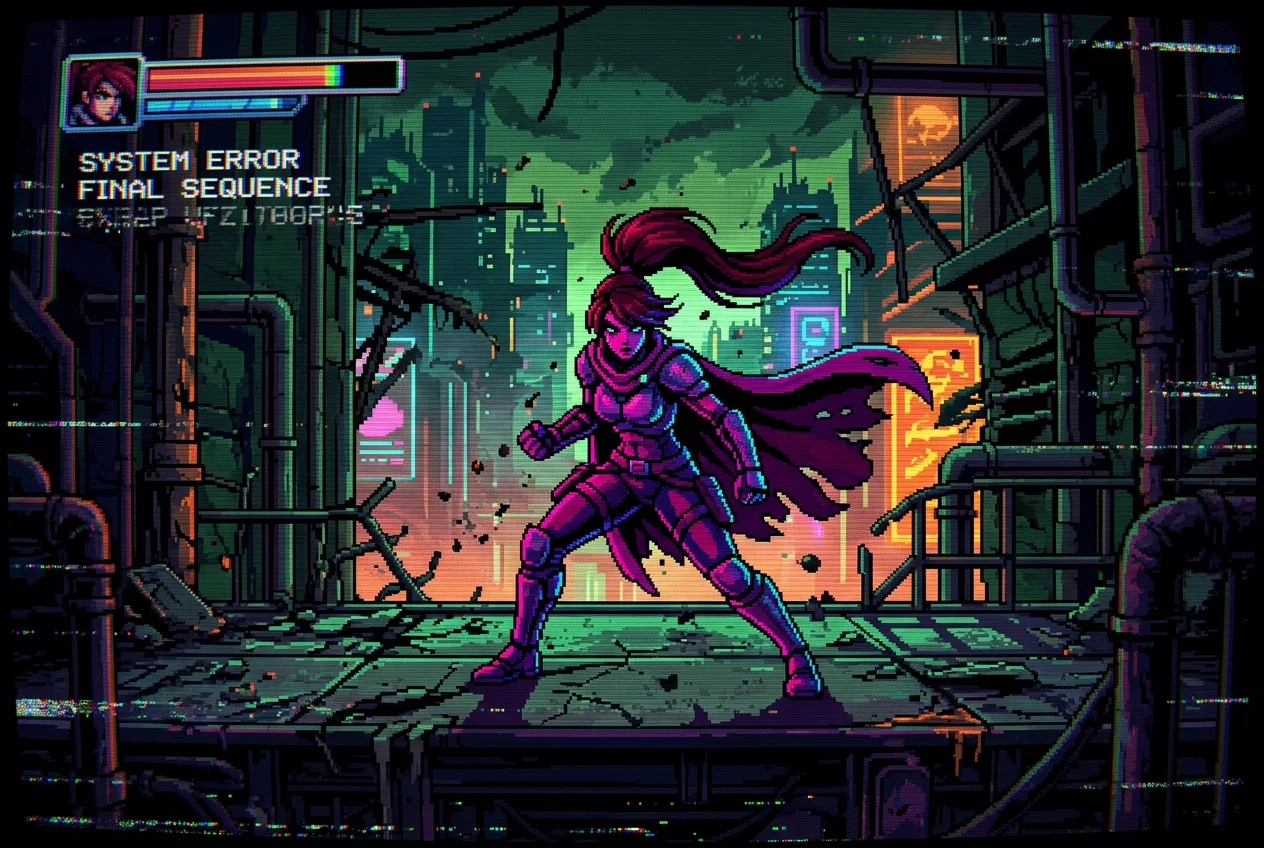
In the final moments of Comix Zone, the stakes couldn't be higher. Sketch Turner faces off against Mortus while his ally, Alissa Cyan, is trapped in a rapidly filling vat of acid. For most players, the ending is bittersweet: Mortus is defeated, but Alissa is lost to the chemical bath. However, a persistent myth suggests that a "Good Ending" exists—one where Alissa is rescued and joins Sketch in the real world.
This rumor was the crown jewel of mid-90s schoolyard discussions. Legends claimed that if you could finish the fight in under a minute, or perhaps trigger a specific hidden switch in the previous panel, the vat would drain. Some even swore they saw a secret cutscene where the two characters walked through the streets of New York together.
Online Echoes and Unused Code
With the rise of the internet, these claims didn't vanish; they evolved. Enthusiasts started searching online for ROM hacks and prototype versions of the game, hoping to find the "lost" frames of animation. Curiously, data miners eventually discovered unused sprites in the game's code that showed Alissa in a relaxed, non-combat pose, fueling the fire that an alternate conclusion was at least planned by the developers at Sega Technical Institute.
Whether this ending was truly accessible in the retail version or simply a remnant of a discarded script remains one of the most debated topics in retro gaming history. It captures the essence of 90s gaming—the belief that something more was always hidden just behind the next pixel if you were skilled enough to find it. Many players still boot up their consoles today, attempting to beat the clock in the final panel, driven by the slim hope that the urban legends were true all along.
The Comic Book That Never Ended
Comix Zone represented one of Sega's most ambitious artistic experiments, blending comic book aesthetics with beat-'em-up gameplay in ways that had never been attempted before. The game's unique visual style — where panels became levels and sound effects were rendered as onomatopoeia floating across the screen — created an atmosphere that felt genuinely different from anything else on the Mega Drive. This distinctive presentation naturally led players to believe that the game contained secrets beyond the standard narrative, including alternate endings that would reveal different fates for the protagonist Sketch Turner.
The rumor of an alternate ending gained traction because Comix Zone was notoriously difficult. Many players never completed the game, and those who did often reached the finale with depleted health and limited resources. The ending they witnessed featured Sketch escaping the comic book dimension, but the abrupt transition left some fans unsatisfied. They theorized that a more elaborate conclusion existed for players who achieved perfect scores, collected hidden items, or defeated bosses using specific combo sequences. These theories were fueled by the game's own design, which rewarded exploration with hidden power-ups and secret panels.
Analysis of the Comix Zone ROM has revealed no evidence of alternate ending sequences. The game's memory is tightly packed with animation frames and audio data, leaving little room for the extensive cutscenes that would be required for multiple endings. The source code, as documented by preservationists, shows a single ending routine that triggers regardless of player performance. However, this technical reality hasn't diminished the cultural significance of the alternate ending myth. It remains a testament to how Comix Zone's innovative presentation inspired players to imagine possibilities beyond what the cartridge could contain.
The Architecture of Imagination
What made Comix Zone particularly fertile ground for myth-making was its meta-narrative structure. The protagonist was an artist trapped inside his own creation, a premise that naturally invited players to look for layers of meaning beneath the surface gameplay. Every panel transition, every scripted event, and every background detail seemed to hint at a larger story waiting to be uncovered. The game's villain, Mortus, was a creation who had rebelled against his creator — a narrative that mirrored players' own desire to find secrets that the developers might have hidden from themselves.
The development team at Sega Technical Institute reportedly considered multiple ending concepts during pre-production, including one where Sketch would remain trapped in the comic dimension and become its permanent guardian. These early concepts, discussed in rare interviews with lead designer Peter Morawiec, never progressed beyond the planning stage. But their existence in the historical record provided just enough credibility to sustain fan theories for years. Players who had heard fragments of these interviews could claim insider knowledge, adding authority to rumors that had no basis in the final product.
The Comix Zone alternate ending myth also reflects broader trends in 90s gaming culture. Before the internet made comprehensive walkthroughs universally available, players relied on fragmented information from magazines, telephone hotlines, and word-of-mouth. This information ecosystem was perfect for the growth of elaborate theories about hidden content. Comix Zone, with its artistic ambition and unconventional structure, became a natural focal point for these theories. Even today, fans continue to create their own "alternate endings" through ROM hacking and fan fiction, keeping the myth alive in the collective imagination of the retro gaming community.
Case Files: Comments
ComicKid
2026-05-09The rat always dies in my playthrough. Is there a way to save Roadkill too in this supposed ending?
Add to the Archive